

By Yan Chang | Pixel Insight | Beijing, Oct. 28, 2025
When three Chinese companies released their next-generation AI glasses this fall, the market finally felt as if it had reached its brand new moment. Within weeks, Rokid Glasses RV101, INMO GO3, and Quark S1, three devices with distinct design philosophies, arrived almost simultaneously, drawing attention well beyond the tech community.
At first glance, they look like ordinary spectacles, but each represents a different vision for how humans and machines will coexist in an era of ambient intelligence.
Three Designs, One Ambition
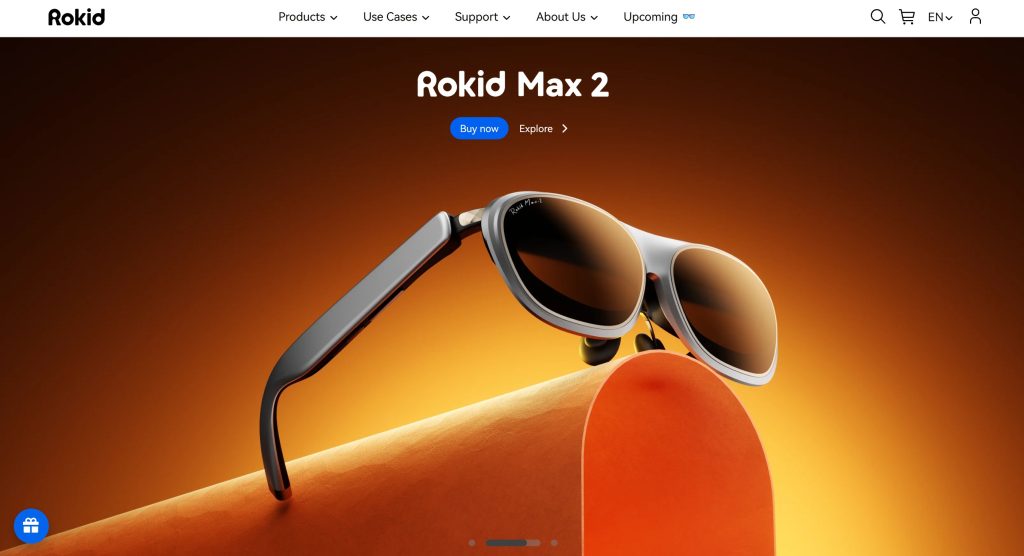
Rokid Glasses (RV101), introduced in September, leans heavily into visual experience and AR recording. The device weighs just 49 grams, according to NotebookCheck, and uses Sony’s 12-megapixel IMX681 sensor with a 109-degree field of view, positioning it as a creator-friendly “wearable camera.”
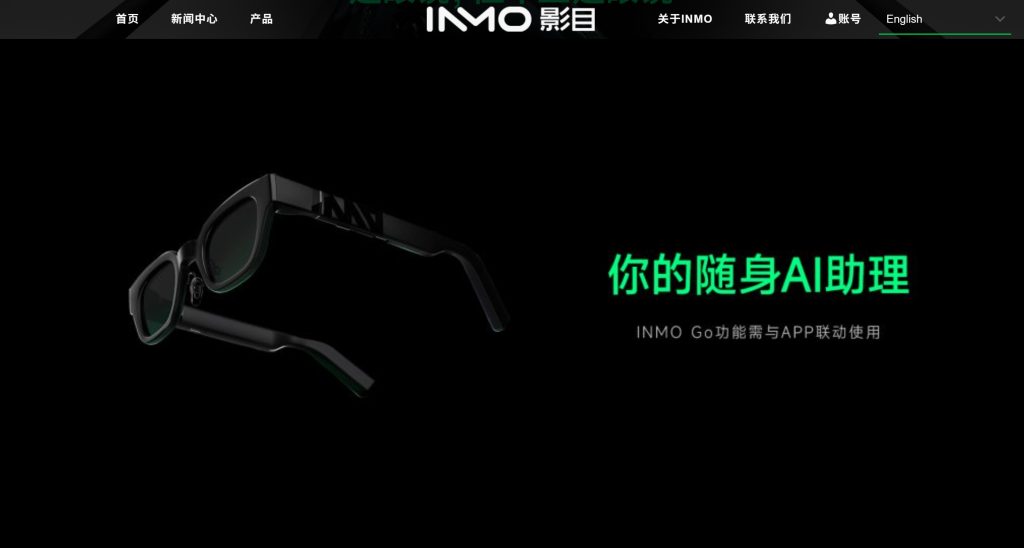
Launched a month later, INMO GO3 takes a different approach. It is marketed as “an AI assistant you can wear,” combining a dual-chip Unisoc W337 processor, a monochrome MicroLED display (640×480), and two swappable 270-mAh batteries for all-day use, as reported by Sina Finance.
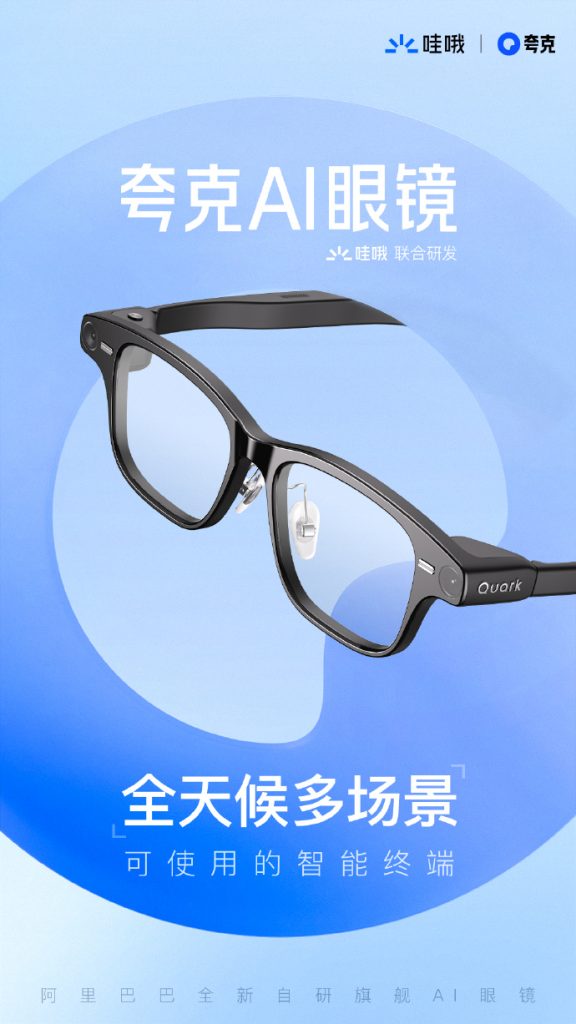
Finally, Quark S1 pushes on-device intelligence even further. Reuters reported that Alibaba’s Quark integrates the company’s Qwen large language model with the Quark assistant, enabling real-time dialogue, transcription, and translation. Priced at about ¥4,699 ($660), the first batch is scheduled for delivery in December.
This is a detailed comparison of the differences between these three glasses in various dimensions:
| Specification | Rokid Glasses (RV101) | INMO GO3 | Quark S1 |
| Release Date | September 2025 | October 2025 | October 2025 |
| Weight | 49g | 53g | 51g |
| Interaction | Voice + Buttons + Finger Ring (sold separately) | Voice + Buttons + Finger Ring (included in first batch) | Voice + Buttons |
| Memory | 2GB RAM + 32GB ROM | 256MB RAM + 64GB ROM | 3GB RAM + 32GB ROM |
| Chipset | Qualcomm AR1 + RT600 | Unisoc W337, dual-chip | Qualcomm AR1 + Hengxuan S2800 |
| Battery Capacity | 210mAh | 270mAh | 280mAh |
| Replaceable Battery | Not supported (sold separately in future) | Supported (included in first shipment) | Supported (included in first shipment) |
| Photo/Video Function | Supported | Supported | Supported |
| Image Sensor | Sony IMX681 | Unknown | Sony IMX681 |
| Camera Resolution | 12MP (3024×4032), supports landscape capture | Unknown | 12MP |
| Viewing Angle (FOV) | 109° (wide angle) | Unknown | Unknown |
| Frame Rate | 30 FPS | Unknown | Unknown |
| Audio | 4 microphones + 2 speakers | 4 microphones + 2 speakers | 5 microphones + 2 speakers (rumored) |
| Display Type | Micro LED + Diffractive Waveguide | Micro LED + Diffractive Waveguide | Micro LED + Diffractive Waveguide |
| Optical Type | Monocular Waveguide | Monocular or Binocular | Binocular Waveguide |
| Display Color | Monochrome Green | Monochrome Green | Monochrome Green |
| Field of View (FOV) | 30° | 30° | 26° |
| Display Resolution | 480×640 | 480×640 | 480×640 |
| Brightness | Up to 1500 nits | Up to 1500 nits | Up to 2600 nits (rumored) |
| Connectivity | Wi-Fi 6, Bluetooth 5.3 | Wi-Fi 2.4G/5G, Bluetooth 5.4 | Wi-Fi, Bluetooth |
| Other Features | — | Offline translation, RTOS system, AI assistant, anti-shake camera, keyframe recording | 7.5mm thin temples, navigation lights, powered by Alibaba Qwen AI, modular battery/charging base options |
| Retail Price | ¥3,882 (¥3,299 after discount) | ¥3,299 (intro price ¥2,999) | ¥3,882 (VIP88 members for ¥3,299) |
| Prescription Options | Detachable magnetic lenses, ¥399–¥599 | — | Full lens replacement service, ¥700–¥1500 |
Together, these products outline three potential futures for AI glasses: AR Vision, AI Assistant, and AI–Ecosystem Integration.
From “AI in Pocket” to “AI in Sight”
For much of the past decade, AI lived inside phones and browsers. Now it is moving directly into users’ line of sight. This shift, from screen-based interaction to spatial, embodied intelligence, is evident in how these glasses combine voice recognition, natural language processing, real-time imaging, and waveguide projection in a single wearable.
Rokid emphasizes visual augmentation and hands-free capture. INMO focuses on conversation, navigation, and translation, relying on replaceable batteries for continuous use. Quark, by contrast, reimagines the glasses as a consumer gateway to Alibaba’s AI ecosystem, running Qwen-powered features that reduce cloud latency and unify search with dialogue inside the Quark app.
In short, AI is no longer a distant interface—it is becoming a companion.
The Economic Logic Behind the Boom
The surge is measurable. According to 36Kr Global, citing IDC data, China shipped about 664,000 AI-enhanced smart glasses in Q2 2025, a 145.5% year-on-year increase. VRAR Expo News added that IDC projects shipments could reach 2.75 million units in 2025, up 107% from the previous year.
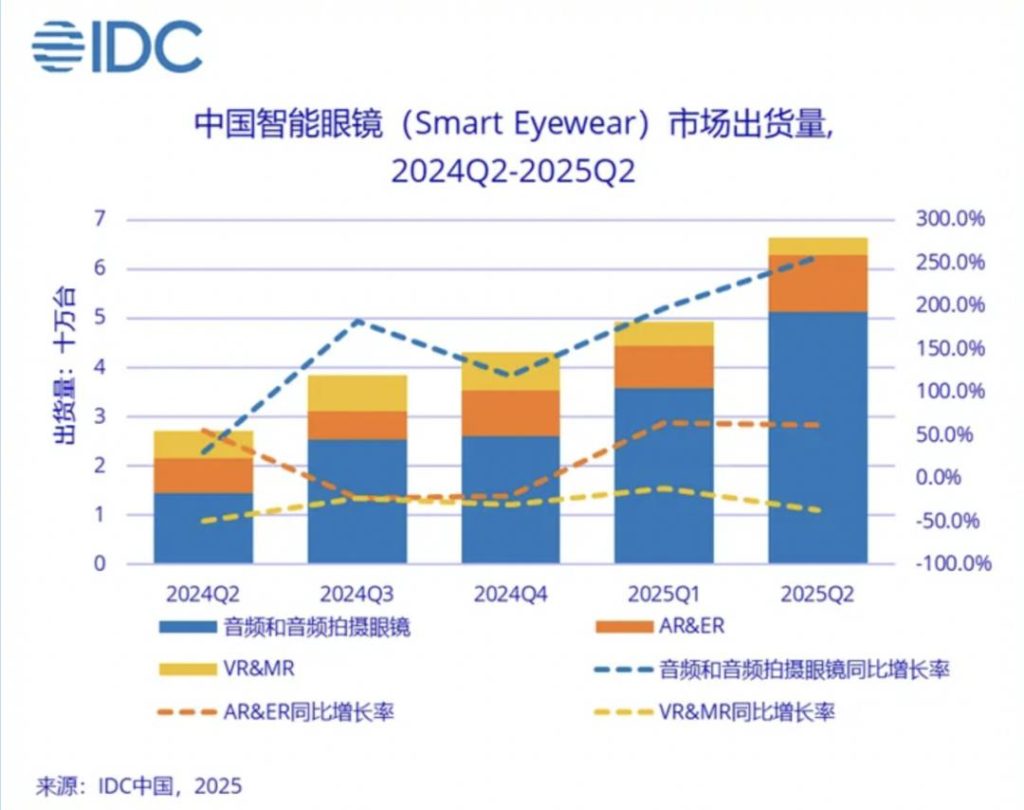
Three forces are driving this growth:
1. Falling hardware barriers.
An IDC Industry Blog noted that the domestic production of waveguides, micro-LED displays, and AI chipsets has sharply reduced costs and improved comfort. Components once used only in enterprise headsets are now affordable for consumers.
2. Ecosystem competition.
Industry analysts note that the competition in smart eyewear has shifted from hardware to holistic ecosystems—including supply chains, AI platforms, and content services. Rokid is developing an AR-first content and utility layer; INMO collaborates with Unisoc and app partners to refine a lightweight AI-communication stack; and Alibaba positions Quark as a consumer AI hub that connects chat, search, and multimodal assistants, all powered by Qwen. According to Digitimes, “ecosystem [is] taking shape” as more smart glasses roll out in 2025. Similarly, Traxtech argues that AI glasses are creating “entirely new end-to-end supply chain ecosystems.”
3. The experience economy of ‘intelligent productivity.’
Among Gen Z and young professionals, adoption is driven less by novelty and more by first-person efficiency: record, summarize, and translate without touching a phone. Analysts at IDC highlight that lightweight “life-logging” and creator workflows are normalizing first-person capture as a mainstream behavior.
From Hardware Innovation to Economic Strategy
This wave also signals a shift in China’s digital economy, from AI for data to AI for presence. Instead of confining intelligence to the cloud, manufacturers are embedding it into everyday objects, glasses, rings and earbuds, so that assistance appears when and where it is needed.
Economically, the industry now connects:
- Upstream optical and semiconductor supply chains;
- Downstream subscription and enterprise service ecosystems; and
- Developer platforms for localized third-party apps.
This evolution aligns with China’s policy goal of cultivating “new-quality productive forces,” linking consumer technology with industrial and public-sector applications such as logistics training and healthcare support.
A Global Lens: Capacity and Competition
Globally, momentum is equally strong. Eyewear giant EssilorLuxottica, Meta’s Ray-Ban Meta manufacturing partner, told The Verge that it aims to expand annual smart-glasses output to 10 million units by 2026 — a sign of growing confidence in the mass-market potential for camera- and audio-first glasses.
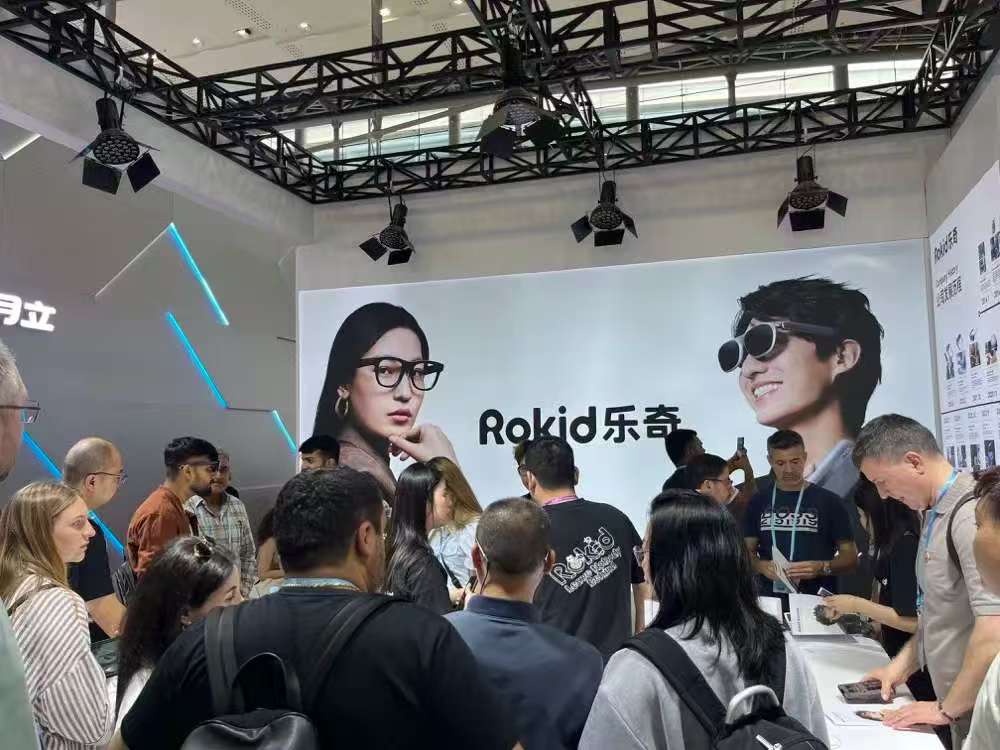
This global ramp is reshaping competition at home. As 36Kr Technology reported, domestic launches from Xiaomi, Rokid, INMO, and Alibaba’s Quark aim to maintain market share not only through pricing, but also through distinct interaction models — translation-first, assistant-first, or AR-first — tailored to Chinese users’ habits and ecosystems.
The First-Person Future
From Rokid’s visual storytelling to INMO’s conversational utilities to Quark’s ecosystem-level intelligence, these glasses are far more than gadgets. They mark a shift from looking at technology to looking through it.
Just as smartphones once transformed communication, AI glasses are poised to redefine how we perceive and participate in the digital world. The next decade of computing may not unfold on screens at all — but in the space between human vision and machine understanding.